UX Research Case Study · AI + Fashion E-commerce
FIT//ME
Can AI make online fashion feel less like a gamble?
A research-led exploration of how virtual try-on can improve confidence, trust and decision-making when shopping for clothes online.
5–7 minute read
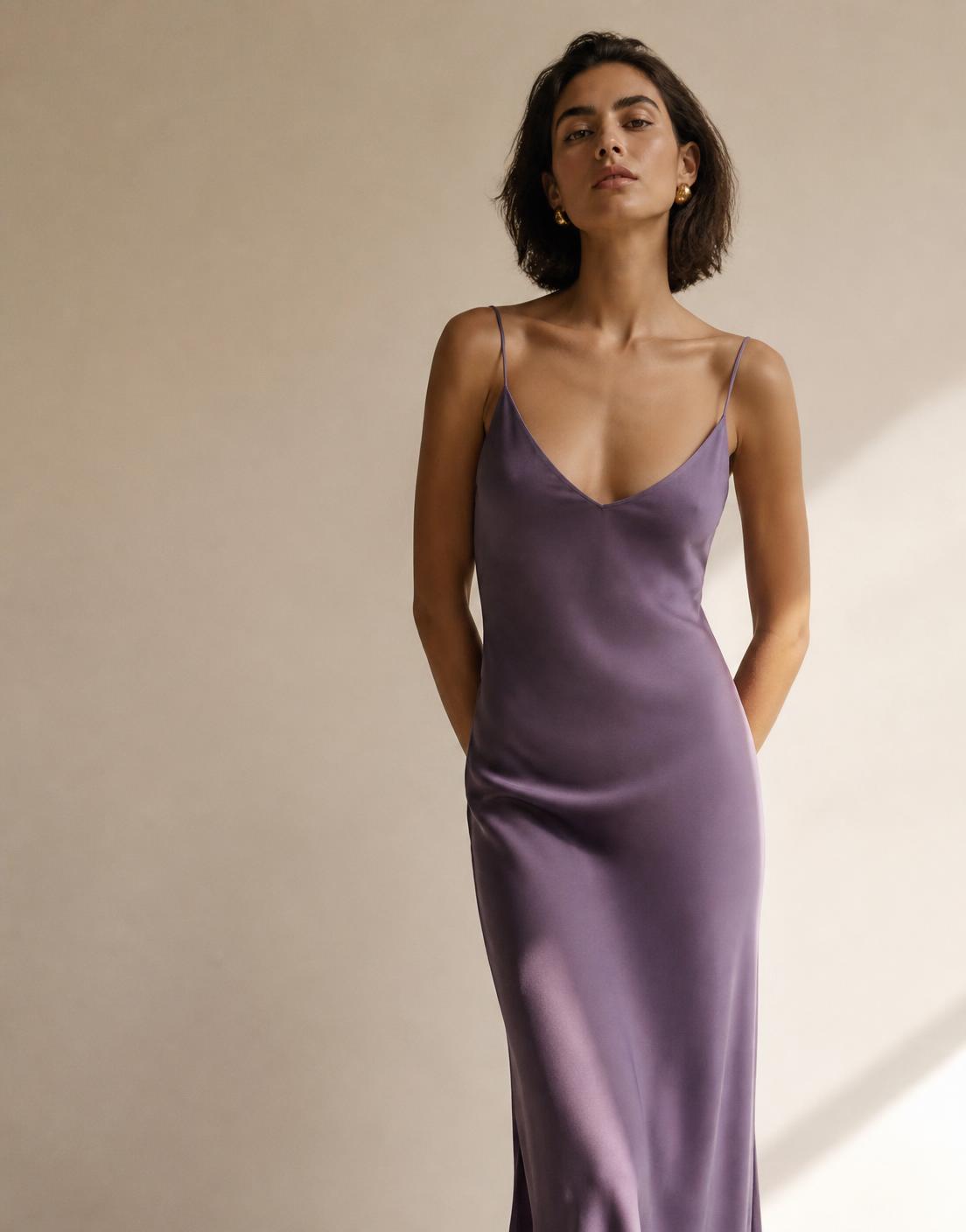
FIT CONFIDENCE
High · Best match M
- Role
- UX Researcher + Product Designer
- Domain
- Fashion E-commerce · AI · AR
- Research
- Desk Research · Literature Review · Historical Survey Analysis · Competitive Analysis · Research Synthesis · Concept Evaluation
- Focus
- Trust · Fit Confidence · Privacy · Purchase Decisions
- Project type
- Independent portfolio research project
This project revisits an earlier virtual fitting-room concept through a 2026 research and AI lens.
01 · The problem
Online shopping solved convenience.
It hasn’t solved confidence.
Fashion shoppers can compare hundreds of products without leaving home, but one fundamental question remains difficult to answer.
Will this actually look and fit the way I expect?
0%
of online shoppers surveyed by Google reported being dissatisfied with an online fashion purchase because the item looked different on them than expected.
0%
said they did not feel represented by traditional model imagery.
The questions behind the hesitation
- “Is this actually oversized?”
- “Where will the hem sit on me?”
- “Will this cling around my waist?”
- “Does this brand run small?”
- “Is the AI showing me something realistic?”
The problem is bigger than choosing S, M or L.
It is uncertainty.
Formative research
I had explored this problem before.
This project began years earlier as a university exploration of an AR-powered virtual fitting room. My original research focused on sizing, fit and reducing returns.
Rather than discarding that work, I used it as formative research and revisited its assumptions against today’s technology and published research.
Then
Virtual try-on as a technology problem.
“How can AR recreate the fitting room?”
Now
Virtual try-on as a decision problem.
“What does someone need to know before they feel confident buying something they haven’t physically tried on?”
My original research
A useful signal from my earlier study
N = 40
Original exploratory survey
0.0%
of respondents reported that they had returned clothing because it was ill-fitting or did not look the way they expected.
Historical formative research conducted for my original Virtual Trial project. A small convenience sample — not nationally representative, and not used here as proof of a market-wide effect.
Participants described several ways of reducing uncertainty:
- Buying from brands whose sizing they already knew
- Checking sizing charts
- Measuring themselves
- Intentionally sizing up
- Making sure exchanges were available
What caught my attention wasn’t simply that people struggled with fit. They had developed workarounds for uncertainty.
Participants also liked the idea of virtual try-on but questioned whether phone-based body scanning could accurately understand their measurements.
Excitement about the concept did not automatically translate into trust in the technology.
02 · Reframing
The technology changed.
The human question became more interesting.
When I first explored virtual try-on, the experience required users to complete a 3D body scan before they could meaningfully use the product. Today, generative AI has changed what is technically possible.
Google Shopping now allows shoppers to virtually try clothing using their own image, while generative models attempt to represent garment characteristics such as drape, folds, stretch, wrinkles and shadows. Google Shopping(opens in a new tab)
So I stopped asking
“Can virtual try-on work?”
And started asking
“When will people trust it enough to influence a real purchase?”
Research question
How might virtual try-on reduce uncertainty and increase purchase confidence without asking shoppers to blindly trust AI?
Confidence
What information makes someone confident enough to buy?
Trust
What makes an AI-generated try-on believable?
Fit
How do shoppers currently decide which size to purchase?
Privacy
What information are shoppers willing to provide in exchange for better recommendations?
Behaviour
Does virtual try-on replace reviews and size charts—or become another piece of evidence?
03 · Research approach
I triangulated evidence instead of relying on one study.
Scope & transparency
I did not run new interviews or a new large-sample survey for this 2026 revisit. The contemporary evidence here is secondary research and synthesis, supported by historical formative research I conducted myself.
04 · Evidence
Five signals kept appearing.
Virtual try-on matters when it changes confidence—not when it simply looks impressive.
A 2026 study on AR try-on ran three scenario-based studies examining telepresence, confidence in fit and purchase intention. For narrower-appeal products, confidence in fit mediated the relationship between telepresence and purchase intention.
Source: International Journal of Retail & Distribution Management, 2026 — Augmented reality try-ons as phygital integration technology for sustainable fashion products(opens in a new tab)
Sample
- Study 1
- n = 142
- Study 2
- n = 145
- Study 3
- n = 162
N = 449
Research implication
The goal shouldn’t be “show me wearing it.” It should be “do I now know enough to buy it?”
Design principle
Optimize for decision confidence, not feature engagement.
Looking right and fitting right are two different problems.
A convincing AI image can help someone judge style, colour and overall appearance. It cannot automatically guarantee physical fit.
Fit depends on variables including:
- Garment measurements
- Stretch
- Cut
- Proportions
- Brand sizing
- Body measurements
- Individual fit preference
Style confidence
“Do I like how this looks on me?”
Fit confidence
“Do I believe this size will fit the way I want?”
A study comparing AR garment evaluation with physical try-on specifically examined whether AR can communicate reliable information about fit, size and product performance. Source: Journal of Fashion Marketing and Management — view study(opens in a new tab)
Research implication
Do not collapse visualization and size recommendation into one claim.
A beautiful simulation can still create the wrong expectation.
Generative AI is increasingly capable of representing garments realistically. Google describes its virtual try-on models as attempting to represent drape, folding, cling, stretching, wrinkles and shadows.
But an AI-generated image is still an approximation.
The interface should never imply
“This is exactly how you will look.”
Instead
“Here is a useful preview—and here is what the system cannot reliably predict.”
Transparency is a feature.
The more personal the input, the more valuable the output needs to feel.
Privacy / value spectrum
Low input
Usual clothing size
Height + measurements
Photo
High input
Persistent body profile
A 2025 Journal of Retailing and Consumer Services study examined AR experiences across two branded virtual try-on apps. The researchers found:
- Spatial presence and cognitive involvement improved product attitudes
- Cognitive involvement increased attitude certainty
- Privacy concerns weakened the effect of cognitive involvement on attitude certainty and purchase intentions
Source: Journal of Retailing and Consumer Services, 2025 — view study(opens in a new tab)
Earlier experimental AR research found AR increased perceived informativeness and enjoyment but also increased perceived intrusiveness. Source: Electronic Commerce Research and Applications, 2019 — view study(opens in a new tab)
Design implication
Don’t bury privacy inside Terms & Conditions. Explain it at the moment the user is asked to share.
- What is used
- Why it is needed
- How long it is kept
- How to delete it
N = 0
- R²
- 0.415
- Q²
- 0.386
The opportunity isn’t just visualization. It is better evidence.
A 2026 study analyzed 526 AR-aware fashion consumers. The researchers found AR had a strong direct relationship with purchasing behaviour and could shift decision-making toward more value-oriented assessments.
Source: Computers in Human Behavior Reports, 2026 — Human–computer interaction meets consumer psychology(opens in a new tab)
In plain language: virtual try-on may be most valuable when it gives shoppers better diagnostic information—not simply a more entertaining shopping experience.
Additional research signal
But virtual try-on isn’t universally better.
A 2019 study compared AR virtual try-on with traditional mobile shopping interfaces showing models with varying physical similarity to shoppers.
Virtual try-on was not always perceived as more enjoyable. Traditional imagery featuring models physically similar to the shopper could sometimes be perceived as more convenient and useful.
Source: Journal of Retailing and Consumer Services — Me or just like me?(opens in a new tab)
- Experimental
- 415 responses
- Qualitative
- 49 participants
Technology should earn its place in the journey.
If a simpler representation answers the question better, use the simpler representation.
05 · Synthesis
Shoppers don’t need certainty.
They need enough evidence to decide.
The Confidence Stack
- 1RepresentationCan I picture this on someone like me?
- 2FitWhat size is most likely to work?
- 3EvidenceWhy is the system recommending it?
- 4RealityWhat could the simulation be missing?
- 5Social proofWhat happened to shoppers like me?
- 6ControlWhat happens to my data?
The Confidence Stack is my synthesis of the research reviewed for this project. It is not a validated academic model.
Research became five product principles.
- 01Value before setupLet people experience virtual try-on before asking them to create a detailed profile.
- 02Explain the recommendationNever show “Size M” without explaining why.
- 03Separate style from fitA visualization answers appearance. Fit recommendations answer sizing.
- 04Make uncertainty visibleCommunicate what AI can and cannot reliably predict.
- 05Give people controlPhotos, measurements and profiles should be understandable, optional where possible and easy to delete.
06 · Product translation
FIT//ME
Not another shopping app. A decision-support layer for fashion e-commerce.
FIT//ME is designed to sit inside an existing retailer’s product page. Instead of asking shoppers to leave their shopping journey and enter a separate virtual world, it appears at the moment uncertainty occurs:
when someone likes an item but isn’t sure whether to buy it.
Feature 01 — Try On Me
See yourself before committing.
Take or upload a photo, follow three short guidance cues, and generate a virtual preview. The photo-storage decision is made in the same moment the photo is asked for — not buried in settings.
Research rationale
Unlike my original concept, a full body scan is not mandatory before shopping. My historical usability work suggested mandatory measurement setup created friction, while current VTO technology demonstrates that useful visualization can begin from an image.
TRY ON ME
See yourself before committing.
- Full body
- Good lighting
- Minimal obstruction
Your photo is used to generate this preview.
Feature 02 — Fit Confidence
A recommendation should come with a reason.
Fit Confidence is expressed as high, medium or low — never as an invented accuracy percentage. A confidence score should only be probabilistic if a validated model actually produces probabilities.
Every recommendation shows the inputs behind it, and names the one thing that might not work.
Best match
M
- Similar to your usual size
- Waist measurements align with this garment
- Relaxed through hips
- Sleeves may run slightly long
Based on
Fit Confidence estimates sizing suitability. It does not guarantee fit.
Feature 03 — Reality Check
What the AI image can’t tell you.
Toggle between the visual and the caveats. Style View answers appearance. Reality Check trades visual polish for the information that determines whether the garment behaves as the image suggests.
FABRIC
Low stretch
LENGTH
Varies
COLOUR
Approximate
WHAT THE IMAGE CAN'T TELL YOU
- Fabric
Low stretch
This fabric has limited give.
- Length
Varies
May sit lower depending on torso proportions.
- Colour
Approximate
Lighting and screen settings can affect appearance.
- Fit pattern
Fitted waist
Similar shoppers frequently describe the waist as fitted.
Why this exists
Generative imagery can look highly convincing. That makes communicating uncertainty more—not less—important.
Don’t hide uncertainty.
Make it useful.
Feature 04 — Bodies Like Mine
Make reviews relevant to the body making the decision.
Instead of a five-star rating and “Love it!”, surface reviewers whose height, usual size and fit preference resemble the shopper’s — plus what those shoppers actually did about sizing.
HEIGHT 160–165 cm
USUAL M · BOUGHT M
“True at the waist but slightly long.”
HEIGHT 166–170 cm
USUAL M · BOUGHT L
“Sized up for a relaxed fit through the hips.”
HEIGHT 155–160 cm
USUAL S · BOUGHT S
“Length hit lower than the preview suggested.”
Aggregated fit behaviour
23
similar shoppers
- 17
- kept recommended size
- 4
- sized up
- 2
- sized down
ILLUSTRATIVE PRODUCT DATA — NOT RESEARCH FINDINGS
Research rationale: social evidence becomes more useful when shoppers can determine whether the reviewer is relevant to their own decision.
Feature 05 — Compare
Shopping decisions are comparative.
Shoppers can hold up to three looks side by side and compare the evidence, not just the photos.
The original project included mix-and-match functionality. The new concept reframes that behaviour around a more specific job: help me choose between the options I’m actually considering.
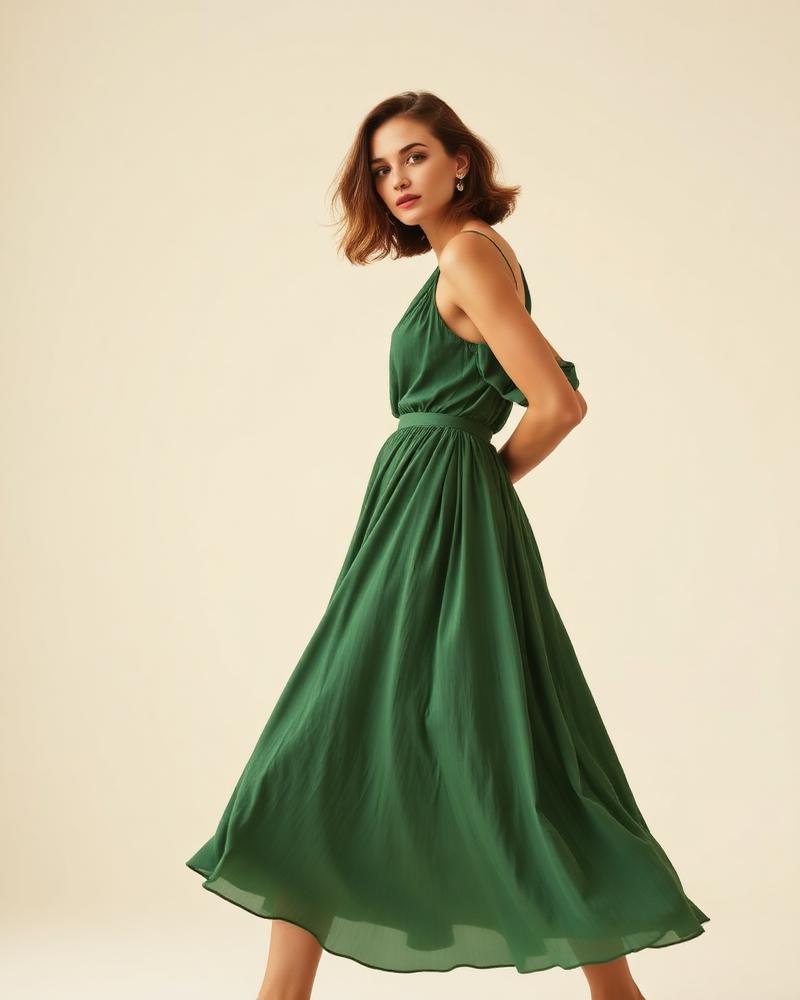
LOOK A
Green midi dress
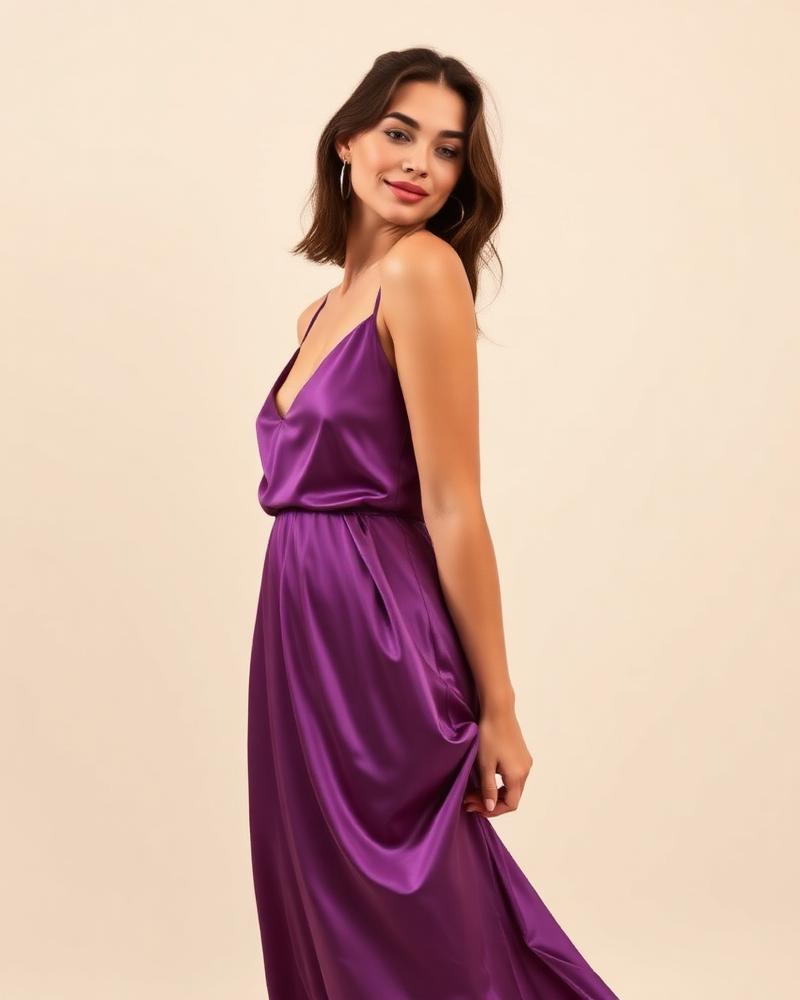
LOOK B
Purple slip dress
- Fit confidence
- High
- Medium
- Fit
- Relaxed
- Fitted
- Fabric
- Stretch
- Low stretch
- Price
- $89
- $72
- Similar shopper feedback
- Positive
- Mixed
Feature 06 — Privacy
Body data deserves visible controls.
Photos and measurements are the most personal inputs in this product. The controls for them are written in plain language, offered at the point of collection, and reversible.
No dark patterns.
No vague “improve your experience” language.
Your photo. Your choice.
Used for
Creating your virtual preview.
Not required for
- Browsing
- Viewing size information
- Purchasing
07 · Experience
From “I hope this works”
to “I have enough information.”
The redesign removed technology from the centre of the journey.
Old experience
- 1Sign up
- 2Enter information
- 3Prepare for body scan
- 4Position phone
- 5Scan body
- 6Generate measurements
- 7Browse
- 8Find product
- 9Try clothing
- 10Checkout
New experience
- 1Find product
- 2Try it on
- 3Check fit
- 4Understand uncertainty
- 5Compare evidence
- 6Buy
Less setup. More decision support.
Research-to-design traceability
Every product decision has a source.
Research signal
Users questioned whether body scanning would be accurate.
Product response
Avoid positioning the system as perfectly accurate. Explain confidence and limitations.
Research signal
Fit confidence can influence purchase intention.
Product response
Fit Confidence becomes a core product feature and success metric.
Research signal
Privacy concerns can weaken AR's positive effects.
Product response
Provide explicit controls over photo and profile storage and deletion.
Research signal
Virtual try-on isn't always superior to traditional model imagery.
Product response
Use VTO when it adds diagnostic value rather than replacing all product imagery.
Research signal
Users use multiple signals to reduce purchase risk.
Product response
Combine visualization, fit explanation, relevant reviews and comparison.
Research signal
My earlier prototype required substantial setup.
Product response
Move setup later and allow value before profile creation.
08 · Next research
The concept is a hypothesis.
The next step is testing it.
Nothing on this page has been validated with users in its current form. Here is how I would test it.
Study
Moderated usability + decision-confidence study
N = 12–16
Recruit
People who buy clothing online at least once every two months.
Ensure variation in
- Gender
- Body size
- Age
- Fashion involvement
- VTO familiarity
Task
“You’re buying an outfit for an event next weekend. You haven’t purchased from this brand before and won’t have much time to exchange it. Find an option you would feel comfortable ordering.”
Purchase confidence
- Before FIT//ME: 1–7 scale
- After FIT//ME: 1–7 scale
Trust
- “How much do you trust the fit recommendation?” 1–7
Comprehension
- Can participants explain what Fit Confidence means?
- What Reality Check means?
- What the AI can and cannot predict?
Behaviour
- Whether they open Try On
- Whether they check Fit Confidence
- Whether they inspect Reality Check
- Whether they use similar-shopper reviews
- Whether they compare products
Privacy
- “What information would you be comfortable providing for this feature?”
- Comfort measured separately for clothing size, height, measurements, photograph and saved body profile
Then I would test whether confidence actually changes behaviour.
Control
Standard product page
- Model photos
- Size chart
- Reviews
FIT//ME
Standard product page +
- Virtual preview
- Fit Confidence
- Reality Check
Primary outcome
Change in purchase confidence
Secondary outcomes
- Try-on → add-to-bag conversion
- Recommended-size acceptance
- Time to size decision
- Size-chart backtracking
- Purchase completion
- Post-purchase fit satisfaction
- Fit-related return rate
Research noteReturn rate should be treated as a long-term outcome. A prototype study cannot credibly prove that FIT//ME reduces returns.
What success would look like
These are hypotheses and measures I would track — not achieved results.
User
- ↑ Purchase confidence
- ↑ Understanding of fit recommendation
- ↑ Confidence selecting size
- ↓ Decision uncertainty
Product
- ↑ Try-on to add-to-bag conversion
- ↑ Recommended-size acceptance
- ↓ Size-selection backtracking
Business (potential, long-term)
- ↓ Fit-related returns
- ↓ Exchanges
- ↑ Conversion
- ↑ Repeat purchase confidence
09 · Reflection
Research changed the product I thought I was designing.
I started with
I ended with
“A 3D body scanner can solve sizing.”
“People need understandable evidence—not technological certainty.”
“Virtual try-on is the solution.”
“Purchase confidence is the outcome.”
“More realism means better UX.”
“Realism without transparency can create false confidence.”
“Collect measurements during onboarding.”
“Earn the right to ask for personal information.”
“Reviews are secondary.”
“Relevant social evidence can help people interpret uncertainty.”
Final reflection
When I first explored virtual try-on, I treated it as a technology problem. How can AR recreate the fitting room?
Years later, revisiting the project changed the question. What does someone need to believe before they’re confident enough to buy something they haven’t physically tried on?
The research suggests that virtual try-on can influence confidence, attitudes and purchase decisions. But the technology also introduces new questions around realism, privacy and trust. That changed the product.
FIT//ME doesn’t try to convince shoppers that AI knows exactly how something will fit. It helps them understand:
- what the system knows,
- why it is making a recommendation,
- what other shoppers experienced,
- what remains uncertain,
- and what happens to their data.
The takeaway
Good AI doesn’t remove uncertainty.
It helps people make better decisions despite it.
FIT//ME
Research-led · Human-centred · Trust-first
Research note
This case study combines historical formative research from my original Virtual Trial project with publicly available academic and industry research. Published findings are attributed to their original sources. The FIT//ME Confidence Stack, product principles and interface concept are my synthesis of that evidence. Proposed product metrics and validation studies represent future research rather than achieved outcomes.